A racehorse is, in many ways, the equine equivalent of a world-class athlete. Everything in its daily routine—its training, its mental stimulation, and especially its nutrition—is carefully managed to allow the horse to perform at peak speed and power. However, when a racehorse retires, we must look past the athlete and remember the animal. Fundamentally, they share the same digestive physiology as any other horse, yet their “first career” often leaves behind a legacy of gastrointestinal challenges that require careful management, particularly during the harsh winter months.
Throughout a racing career, horses are conditioned for anaerobic performance. To fuel fast-twitch muscle fibres, they require quick-release energy, traditionally supplied through high-starch diets rich in oats and grain mixes. While effective for performance, these rations can be tough on the equine gut.
The primary casualty is often the stomach. Unlike humans, horses produce stomach acid continuously. Without constant forage to act as a buffer, high-starch diets can lead to gastric ulceration. The unprotected squamous region of the stomach is particularly vulnerable to “acid splash” during intense exercise. Furthermore, excess starch that reaches the hindgut can disrupt the delicate microbial balance, lower pH levels and lead to systemic inflammation or metabolic inefficiencies, such as insulin sensitivity.

The Winter Challenge
When ex-racehorses transition to a second career, their digestive system often needs a period of adjustment. This “reset” becomes significantly more difficult in winter. As temperatures drop, a horse’s digestible energy requirements increase by approximately 2% for every 10°C decline below their lower critical temperature.
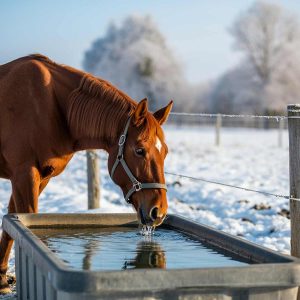
For the retired racehorse, winter presents a double-edged sword: they burn more calories simply to stay warm, yet the quality and availability of pasture—their most natural source of buffering fibre—plummets. While many leisure horses may “do well” on winter forage, ex-racers often have higher metabolic demands and may struggle to maintain condition without a targeted nutritional strategy.

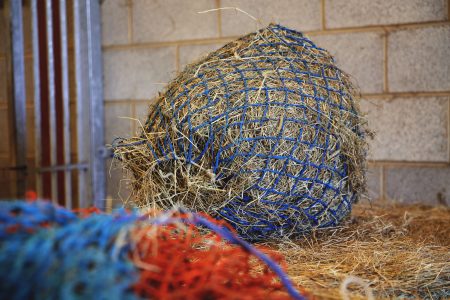
In winter, the focus must shift from quick-release starch to high-quality fibre. Fibre is not merely “bulk”; it is a complex energy source. Through microbial fermentation in the hindgut, fibre is converted into volatile fatty acids (VFAs), which provide sustained, “fizz-free” energy.
To support a recovering gut, owners should look toward “super-fibres” that offer more calorie density than standard hay:
- Alfalfa: Highly digestible and rich in calcium, alfalfa acts as a natural buffer against stomach acid. It provides the protein necessary for muscle maintenance without the “heating” effects of grain.
- Beet Pulp: This is a powerhouse for winter weight maintenance. Beet pulp contains nearly double the digestible energy of grass and is rich in pectin. Pectin is a soluble fibre that strengthens the stomach’s mucus barrier and acts as a prebiotic. Remarkably, research suggests that adding pectin-rich sources can improve the digestibility of other forages—like hay or alfalfa—by 10% to 25%.
Retirement from training does not mean a racehorse stops needing fuel; it means they need a different kind of fuel. Simply “turning them out” for the winter often isn’t enough to counteract the physiological stresses of their past. By replacing high-starch rations with a diverse array of high-quality fibres, owners can stabilise the microbiome, help the gastric lining, and ensure their horse maintains a healthy condition. A thoughtful, fibre-first approach enables ex-racehorses to move on into their new lives with all the health and wellbeing they deserve.